
In today’s world of constant digital noise, shoppers have been trained to expect change at lightning speed. Social media has made launches, teasers, and short-lived “moments” the new normal. A Gen Z shopper can discover, share, and discard a trend in less time than it takes to board a flight.
That pace presents a very real challenge for travel retail. By design, this market does not move at TikTok speed. From securing fresh spaces, to introducing new brands, to navigating the complexities of stock and supply chains, change cannot happen overnight.
Short-term drops and fast pivots simply don’t fit naturally with the infrastructure of airport retail. Stock is more difficult to manage and brand spaces cannot be quickly adapted and overhauled in a retail space which rarely sleeps, and which has safety and practicality considerations above those of a normal store.
By design, travel retail does not move at TikTok speed…change cannot happen overnight.
This, of course, does not mean trends should be ignored. They are a vital part of how shoppers engage and discover, but they cannot be the driving force of this sector. Travel retail must resist the temptation to chase the domestic or digital playbook. The rules here are different.
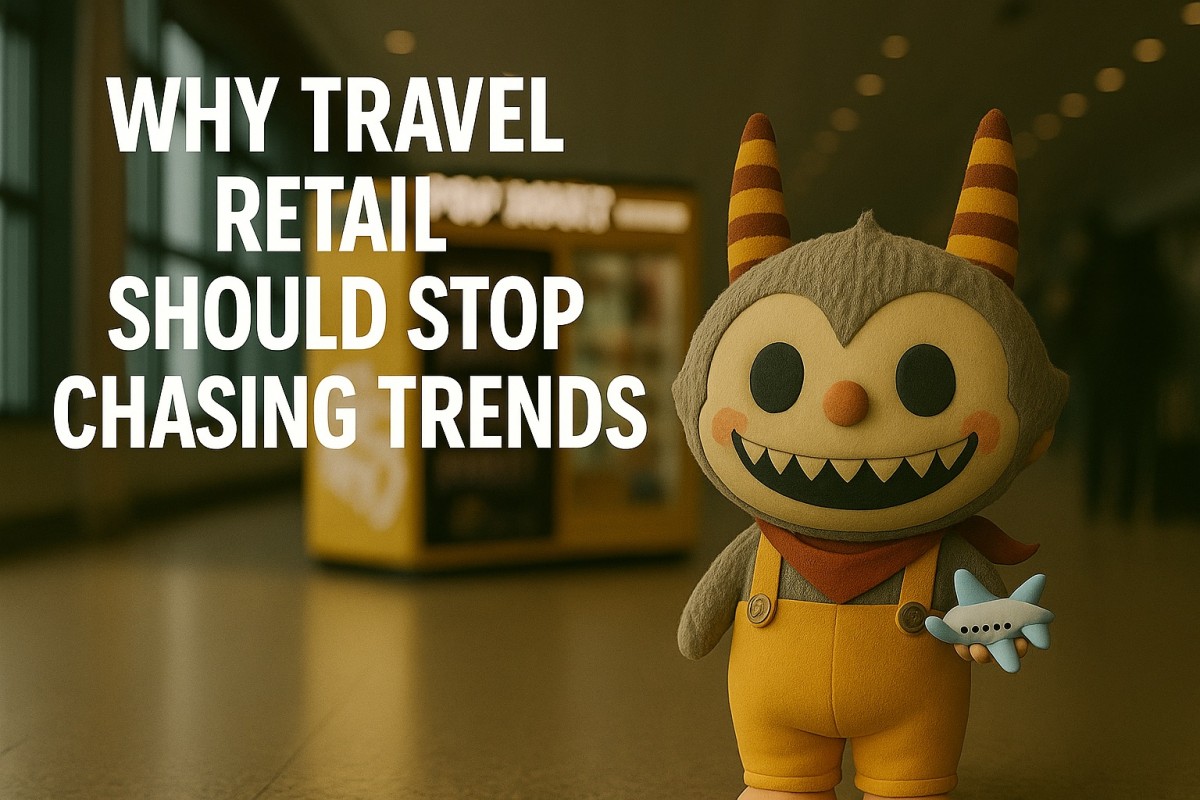
The recent Pop Mart machine at Melbourne Airport is an excellent example. This brings the company’s on-trend Blind Boxes, and the popular Labubu toys, to the airport in a way which is perfect for travellers. It makes an impact, creates engagement and delivers for both shoppers and the airport itself.
Travel retail must embrace its uniqueness. This channel has the power to create an ecosystem that is not only current but also enduring: one that balances the excitement of “what’s new” with the authority of consistency and the power of place. Airports are stages for experiences that blend global travellers, cultural exchange, and a moment in time that cannot be replicated elsewhere.
Travel retail must embrace its uniqueness. Airports are stages for experiences that blend global travellers, cultural exchange, and a moment in time that cannot be replicated elsewhere.
As I have discussed before, travellers do not necessarily enter a travel retail space to shop. They are there to depart. The retail offer must create disruptive engagement, which draws travellers in. And current figures suggest we are not doing so.
Getting this right means the focus should not be on speed, but on distinctiveness. Spaces must feel on-brand but also unmistakably “travel retail.” Offers must be tailored not just to the brand’s DNA, but to the rhythms of the market itself. Above all, experiences must be service-led, immersive, and memorable. Something travellers choose to visit, not simply pass through.
Trends will come and go. What lasts is the impression that travel retail leaves behind. If the sector can build an offer that feels unique, purposeful, and irreplaceable, then it will not just keep pace with shoppers, it will set the pace for what retail can be in a world that moves too fast.