
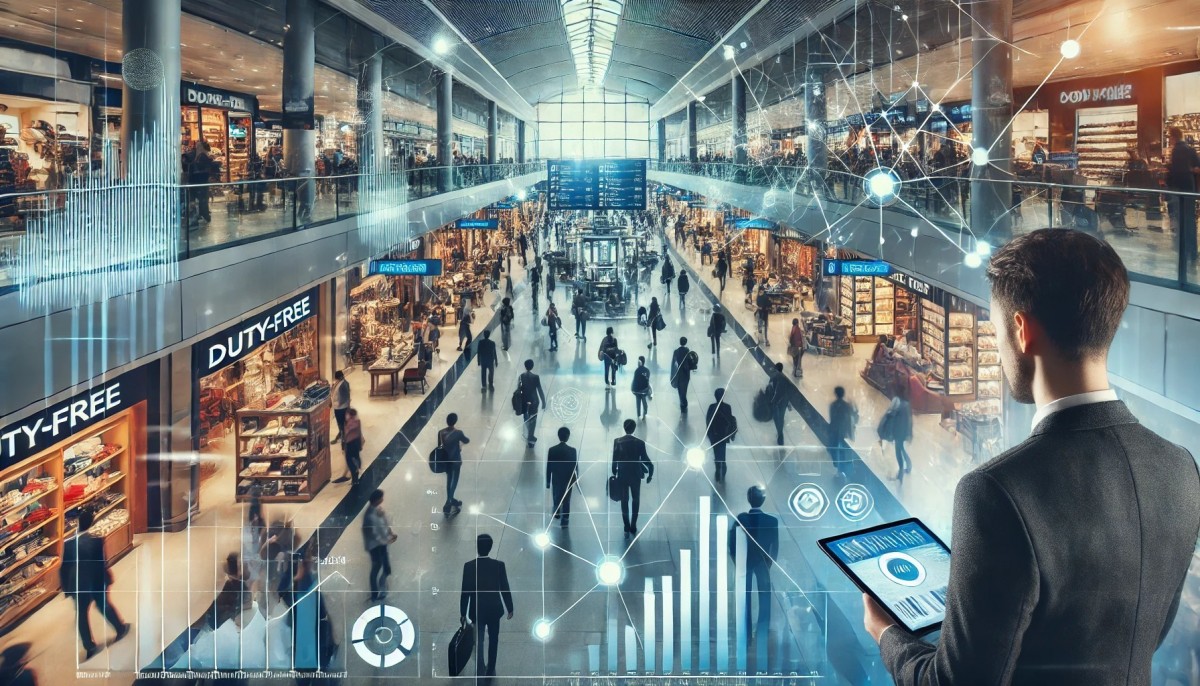
In traditional retail, whether on high streets or in shopping malls, visitor flow largely depends on external factors such as location, seasonality, and the retailer’s own marketing efforts. In an airport setting, however, the situation is quite different: here, it is the airport itself that determines the volume and quality of passenger traffic. This unique characteristic makes it crucial for every airport retailer to constantly monitor visitor flows and ensure they align with the projections shared during the negotiation phase.
Unlike any other retail environment, in airports, the landlord has the power to directly influence both the number and type of consumer present in commercial areas. This occurs through strategic decisions including the allocation of slots to airlines, changes in routes and flight frequencies, and agreements with specific carriers that bring particular types of passengers, such as low-cost or business travellers.
Unlike any other retail environment, in airports, the landlord has the power to directly influence both the number and type of consumer present in commercial areas
This means that even with a well-negotiated contract, traffic conditions can change significantly over time. The airport has every interest in enabling its retailers to perform at their best, maximising the potential of the passenger flow it provides. However, operational needs evolve, and external factors can sometimes interfere with even the best intentions, making continuous monitoring essential for retailers to anticipate any potential impact on their performance.
Another key aspect to consider is that, unlike other retail environments, only in airports is passenger traffic data readily available. In other commercial settings, it is not possible to accurately determine the number of visitors passing in front of a store, making it harder to analyse the relationship between traffic and sales performance.
Traffic variations are first detected by frontline staff—the sales associates who experience the store’s reality daily and observe in real-time who is passing by and who is entering. Unlike management or statistical reports that may take weeks to reflect changes, they are the first to notice shifts in passenger flow and shopping behaviour.
A sudden drop in premium passengers? A variation in the number of Asian tourists with different purchasing habits? A change in boarding areas that diverts main traffic away from stores? These shifts can be immediately identified by frontline staff, who must have a direct communication channel with management to report any anomalies.
Traffic variations are first detected by frontline staff — unlike management or statistical reports that may take weeks to reflect changes, they are the first to notice shifts in passenger flow and shopping behaviour
If this information is promptly gathered and relayed to the commercial department, it becomes possible to act quickly with the landlord, preventing an unfavourable situation from becoming the new normal. Waiting for official data to confirm a trend often means reacting too late, when losses have already accumulated, and negotiation leverage has diminished.
Monitoring passenger traffic is not just about overseeing the landlord’s operations but also about improving the analysis of retail performance KPIs. One of the key indicators that can be derived is the footfall rate, which measures the ratio between the total number of passengers and the number of people actually entering stores.
An increase in airport passenger traffic does not necessarily translate into higher sales if store footfall remains stagnant or declines. This data helps identify potential issues related to store attractiveness, product positioning, or customer segmentation.
But this is a topic we will explore further in the future.