
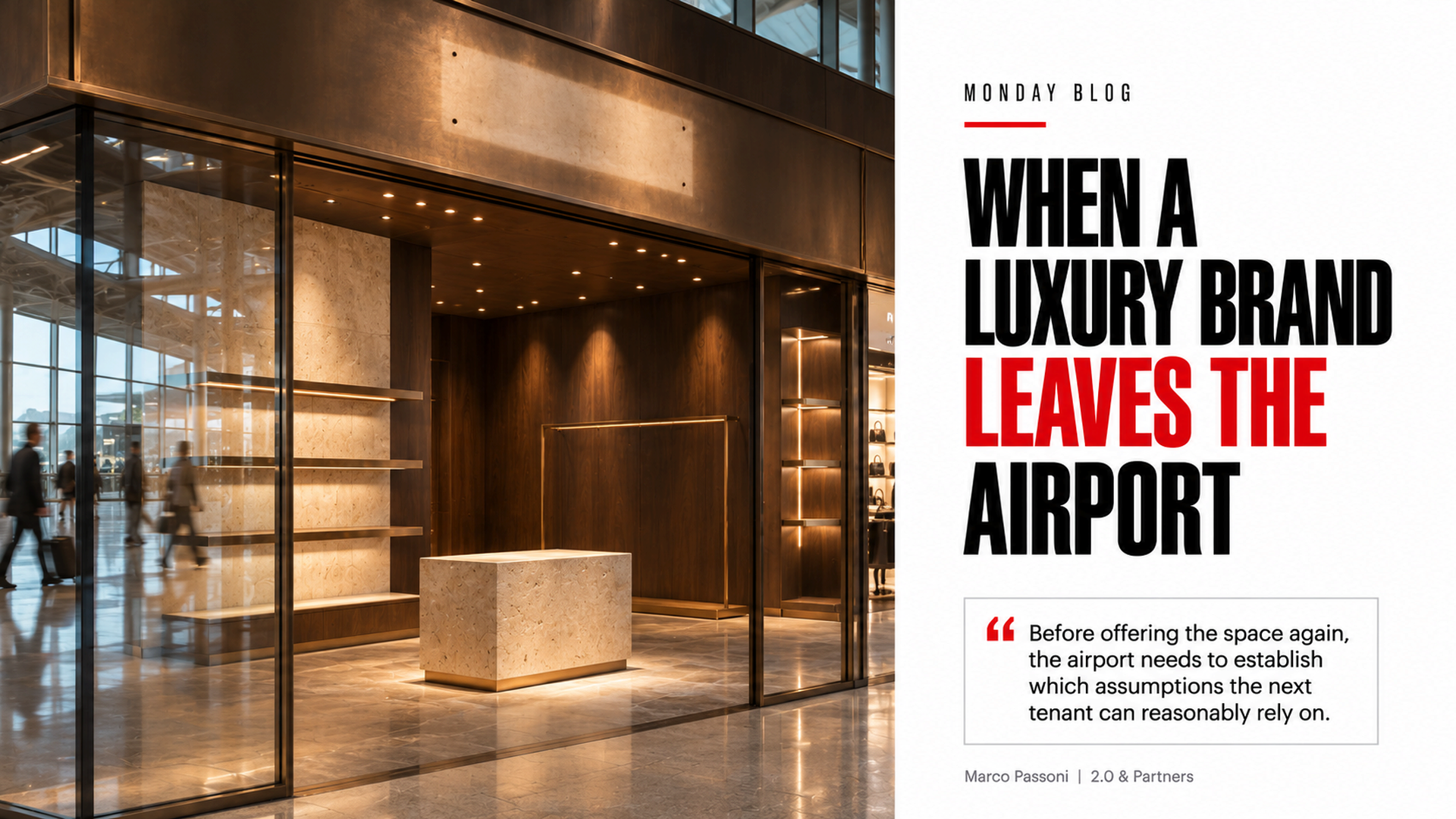
A luxury store is approaching the end of its airport concession. The brand has decided to leave. There is a valuable unit to relet, an income stream to replace and a commercial team preparing to approach potential tenants. Keeping the space occupied matters. Before approaching the next brand, I would want to understand what its predecessor’s experience tells us about the opportunity we are about to offer.
That work needs to begin while the store is still trading. Once the team has dispersed and the unit has been handed back, some of the most useful information becomes harder to recover. Sales reports remain available, but the people who understood why customers walked away may no longer be there. If discussions about renewal have revealed a problem with the location or its economics, that knowledge should inform the next leasing decision.
The circumstances of the departure matter. A brand reducing its international network may leave a store that another business could operate successfully. A retailer may decide that the capital required for a refurbishment would earn a better return elsewhere. A concept may simply have reached the end of its relevance to the passengers using that terminal. Each situation gives the airport a different starting point. Treating every departure as a straightforward opportunity to improve the brand mix misses information that could materially change the next proposal.
Before offering the space again, the airport needs to establish which assumptions the next tenant can reasonably rely on.
I would start with the demand the store could actually reach. Total airport traffic provides context, but the commercial opportunity sits within a much narrower group of passengers. Terminal allocation, departure routes and the position of the unit determine who can realistically encounter it. Those passengers may also have changed during the concession. An opening forecast based on one combination of routes and customer nationalities can become less useful as the airport develops.
Looking at that change helps distinguish a weak concept from an opportunity that has evolved around it. If the passengers passing the store are different from those anticipated when the agreement was signed, the next tenant needs a current assessment. Reusing the original traffic narrative because the airport is still growing would be a poor basis for a new investment. The relevant question is how that growth translates into accessible demand for this particular space and category.
The performance of the departing store then needs to be read within that context. Limited stock availability or inconsistent service may have constrained a business that had a credible market. Equally, good execution may have produced all the demand the location could reasonably support. The airport will not necessarily have access to every part of the retailer’s accounts, and commercial confidentiality has to be respected. There is still value in bringing the available evidence together and testing the explanation against what happened over the concession.
The commercial terms deserve the same scrutiny. A minimum guarantee that looked manageable against the original forecast may have become difficult to sustain. That does not automatically establish what the next agreement should contain. A different category, margin structure or operating model could support a different outcome. It does mean that the proposed rent needs to be assessed alongside a credible trading case. A higher offer is useful only if the business behind it can meet the commitment while operating the store properly.
This is where the next tender can either benefit from the previous concession or repeat its weaknesses. If the unit requires a substantial investment, bidders need enough clarity to assess the return over the available term. If a change in passenger routing is expected, it needs to be reflected in the information they receive. There will always be uncertainty. What concerns me is a bidder being asked to make binding financial commitments without access to information the airport already holds about planned changes that could materially affect the store.
Sometimes the review will point towards a change in the space itself. That has to be considered within the physical and contractual reality of the terminal. Adjacent units may be occupied under agreements with years left to run. Access and operational requirements may limit what can be altered. A promising alternative on a plan is of little use if it cannot be delivered within the leasing timetable. Starting the review before expiry gives the airport a chance to identify the options it can actually offer.
The replacement also needs to make sense beyond its own sales forecast. A new store may generate healthy revenue while taking a substantial share of that business from nearby operators. Another may serve demand that the existing offer does not address. Those outcomes have different implications for the terminal. Neither can be established simply by comparing the proposed rent with the departing tenant’s last payment. The assessment should consider what changes across the relevant commercial area, with realistic assumptions about where the new store’s customers will come from.
The replacement should be judged on the business it can add to the terminal, including the effect on the stores already trading there.
That is a demanding assessment, and forecasts will remain imperfect. I would still expect the proposal to explain why the concept fits the passengers and how its expected sales relate to the existing offer. Recognition of a brand can support the case, but it cannot complete it. The range the store can carry within the available space, its pricing and the resources required to operate it all affect whether the opportunity is commercially credible.
There is also a cost to leaving a unit empty while searching for the ideal answer. Lost income and an incomplete commercial area have consequences. A review should help the airport make a timely decision with better information. Where a temporary use is feasible, it needs its own commercial purpose and delivery plan. It should not become a convenient reason to postpone a decision about the permanent offer.
The new concession should then be assessed against the assumptions used to award it. If sales fall short, the discussion becomes more useful when both parties can examine whether accessible traffic, customer demand or store execution differs from the original case. That provides a basis for deciding what can be improved and by whom. Waiting until the next renewal to have that conversation allows problems to become established before anyone addresses them properly.
A departure can be the right outcome for everyone involved. The brand may have better uses for its capital, and the airport may have a stronger opportunity for the space. What I would question is the speed with which a vacated unit can become a fresh opportunity without a proper examination of the business that occupied it. The next tenant will commit money and people on the strength of that opportunity. Its proposal should benefit from what the airport has already learned.
Marco Passoni has spent more than three decades in the travel retail industry, holding senior leadership roles across distribution, retail and business development. His career included 12 years as CEO of a leading international Duty Free distribution company and a further eight years managing a retail business operating mono-brand fashion boutiques across several international airports.
Today, as Senior Executive Vice President and founding partner of 2.0 & Partners, he develops new business opportunities and services for brands, operators and airports across the global travel retail market. Through 2.0 & Partners, he works with some of the world’s most recognised luxury and premium brands, as well as leading international airports, helping them assess opportunities, strengthen their travel retail presence and navigate the distinctive commercial dynamics of the airport environment. A former elite sailor and World Champion, Marco continues to spend much of his time airside, observing the industry first hand and helping partners and clients respond to the challenges and opportunities of an evolving market.