
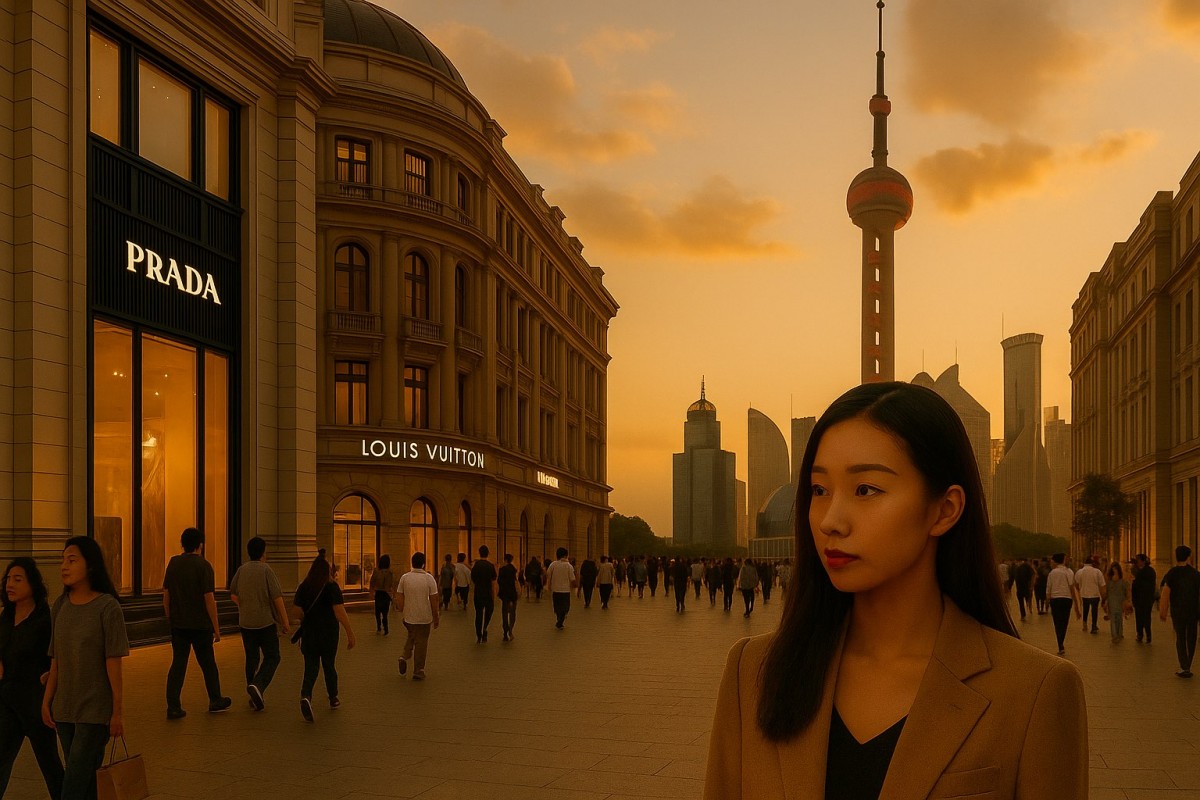
For the past decade, the luxury industry has relied heavily on China to drive global growth. With a swelling middle class, rapid urban development and a deep-rooted aspiration for quality and status, China became the heartbeat of luxury. Brands reshaped their global strategies around Chinese consumer behaviour. Flagship stores were opened in Shanghai and Chengdu before Milan or Paris. Lunar New Year campaigns became as important as Christmas ones. It was not just a market, it was the market.
But as we move deeper into 2025, that once predictable landscape is becoming more complex. Growth has slowed. Confidence has faltered. And perhaps most importantly, the very meaning of luxury for Chinese consumers is being redefined.
The economic signals are clear. After rebounding in early 2023, China’s personal luxury market contracted by an estimated 15% to 20% by year end, according to Bain & Company. This followed three years of exceptional domestic growth during the pandemic. A combination of weaker consumer confidence, property sector instability and youth unemployment has reshaped spending behaviour. Retailers are noticing a marked shift from impulsive purchases to more considered, value driven decisions.
The very meaning of luxury for Chinese consumers is being redefined
And yet, the outlook is not negative. A 2025 consumer sentiment study by Oliver Wyman reports that 56% of Chinese luxury shoppers plan to increase their spending this year, especially among higher income segments. The appetite remains, but it is more focused and filtered.
Chinese consumers are now more interested in what a brand stands for, not just what it sells. Research from the Hurun Wealth Report shows that 45 % of wealthy consumers in China rank cultural relevance and authenticity among their top three purchase drivers, ahead of exclusivity or foreign origin. This is a fundamental change.
Much of this shift is driven by younger generations. Millennials and Gen Z now account for over 50% of luxury consumption in China, and their expectations are shaping the future of the sector. Over 60% of Gen Z consumers in first and second tier cities prefer brands that express individuality over status. And 70% of them engage with luxury through digital platforms first, before ever visiting a store.
This brings us to the role of digital. China remains the global benchmark in luxury digital engagement. Over 80% of luxury transactions are influenced by digital touchpoints, whether through Xiaohongshu, Douyin or livestream e-commerce. Brands that do not invest in localised, platform-specific content risk becoming invisible. Engagement today means storytelling, peer validation and seamless integration between inspiration and transaction.
Chinese consumers are now more interested in what a brand stands for, not just what it sells…This is a fundamental change.
Another emerging force is the ongoing rise of Guochao. Domestic luxury brands are gaining traction, not as affordable alternatives, but as genuine lifestyle choices. According to McKinsey, the share of local premium and luxury brands in fashion and beauty rose from 15% in 2020 to 27% in 2024, and it is projected to exceed 30% by the end of this year. For international brands, this means greater competition not just on price, but on identity and resonance.
Within this evolving dynamic, Hainan has played a pivotal role. Initially promoted as a domestic alternative to overseas shopping during the pandemic, Hainan quickly established itself as a luxury hub in its own right. In 2023 alone, duty free sales on the island reached 65 billion yuan, up 25% year on year. More than 70% of those sales were in fashion, cosmetics and jewellery. The model proved attractive: tax free prices, premium environment, strong brand presence and high domestic footfall.
Even as international travel resumes, Hainan continues to attract interest from both consumers and brands. The province aims to become a free trade port by 2025, with full liberalisation of trade and tax policy. That will make it not just a temporary substitute for outbound spending, but a permanent retail and logistics powerhouse. However, the competition is rising. With Chinese travellers increasingly returning to Paris, Dubai or Tokyo, the Hainan model must now reinvent itself to remain relevant. That means more experiential retail, stronger service, and a shift from transactional to emotional engagement.
In parallel, another significant development took place during the years of restricted outbound travel: the rapid expansion of luxury retail within domestic airports and terminals across mainland China. Many luxury brands invested heavily in presence at locations such as Beijing Daxing, Shenzhen Bao’an and Guangzhou Baiyun, recognising that high traffic and high-spending travellers were now moving exclusively within domestic borders. For several operators, this period saw record-breaking results and unprecedented retail innovation in the airport environment. Yet now, with outbound travel recovering at pace and international shopping options fully reopened, the sustainability of that domestic airport luxury footprint will need to be reassessed. Not all locations will retain the same strategic weight, and choices that made perfect sense during a closed-market phase may require new thinking in this reopened reality.
Another significant development took place during the years of restricted outbound travel: the rapid expansion of luxury retail within domestic airports and terminals across mainland China
Travel is indeed back. Chinese outbound travel volumes reached 80% of pre pandemic levels in early 2025, with top destinations including Japan, Thailand, France and the UAE. Luxury purchases abroad are rising again, particularly among seasoned travellers who compare prices and product availability. That has major implications for duty free and airport retail strategies, especially when nearly 60 % of these travellers say they plan their purchases in advance based on international pricing.
In this evolving landscape, a luxury brand cannot afford to rely on past equity or legacy messaging. It needs to become locally fluent, digitally agile and emotionally intelligent. Chinese consumers are less interested in being told what to buy. They want to be engaged, respected and understood.
This is a market where the rules are being rewritten. Success depends on cultural nuance, market agility and the ability to navigate shifting aspirations with humility and clarity. There is room for growth, but only for those brands that earn it.
Because in China today, luxury is no longer about having. It is about meaning. And meaning cannot be discounted.