
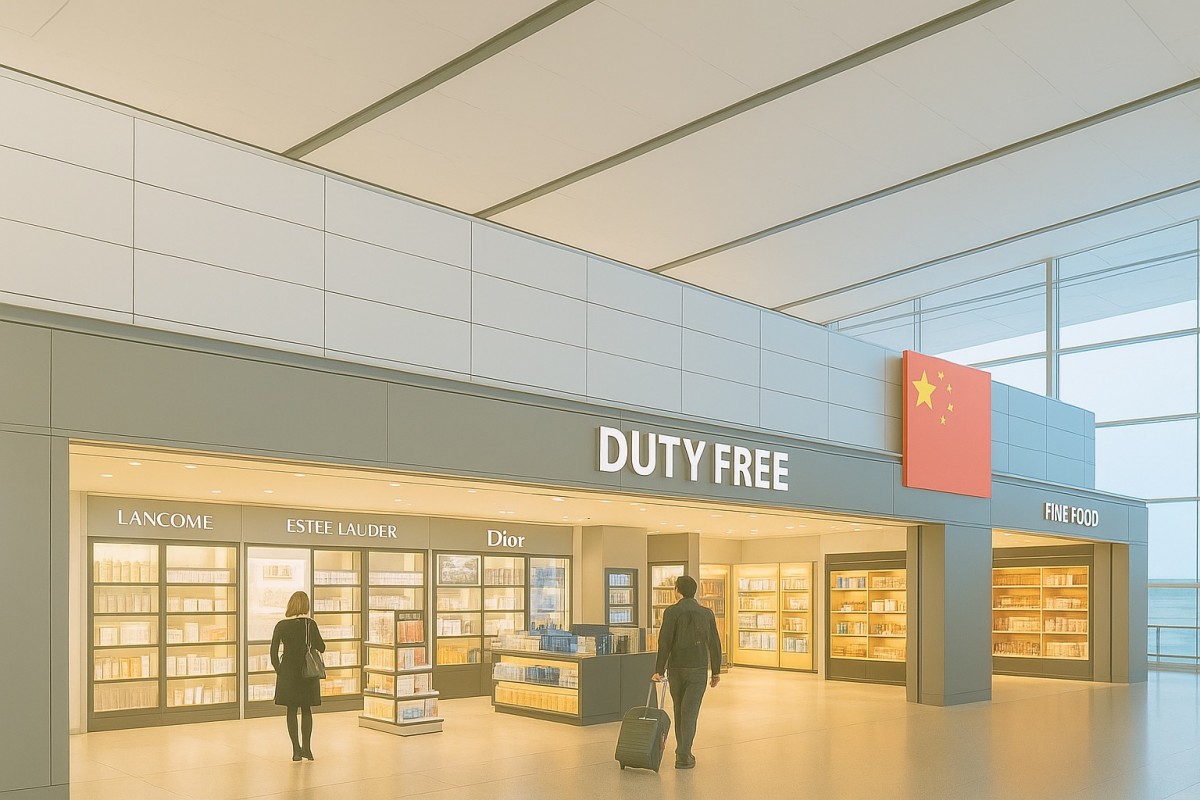
For years, the geography of luxury consumption has followed a well-known route. Chinese travellers fly to Europe, and they buy. The reasons are clear: prices are significantly lower, VAT refunds are accessible, and the brands themselves have built a deep-rooted perception of authenticity and prestige around European shopping. This flow is not accidental, nor is it likely to disappear. Europe remains the epicentre of global luxury spend for Chinese consumers, and it continues to offer a combination of value, experience and reassurance that is hard to replicate.
However, since mid 2024, China has taken a bold step that should not go unnoticed by the travel retail industry. By extending visa free access to citizens of thirty eight countries, including most of Europe, Australia, South Korea and several ASEAN nations, China is not only reopening its doors to the world after the pandemic. It is also making a clear statement: it wants to attract inbound travellers and their wallets, not just their passports.
Europe remains the epicentre of global luxury spend for Chinese consumers, and it continues to offer a combination of value, experience and reassurance that is hard to replicate.
The move is part of a broader economic strategy aimed at stimulating domestic demand. With internal consumption under pressure, and many Chinese consumers still cautious, the government is creating new channels for spending by encouraging inbound tourism. Retail is central to this ambition. Cities like Shanghai and Beijing are not only cultural or political capitals — they are also increasingly promoted as luxury destinations.
The results are measurable. In the first three quarters of 2024, China saw 22.8 million inbound visits. 59% of those — roughly 13.4 million — were made under the new visa free scheme. While most travellers were from nearby markets, such as Malaysia, Thailand and South Korea, the proportion of high spending visitors is growing. Retailers in major cities have reported a renewed presence of foreign shoppers, particularly in high-end segments like fashion, cosmetics and jewellery.
But it would be misleading to suggest that China has suddenly become a more attractive place to shop than Europe. It has not. Prices for luxury goods in China remain higher than in Paris or Milan, partly due to import duties and taxes, and partly due to global pricing strategies adopted by the brands themselves. No inbound policy will change that overnight.
What is changing, however, is the intent. China is making a structural attempt to shift part of the global spending flow back within its borders. This includes the development of massive domestic duty free zones, such as in Hainan, where over RMB 3 billion (about $41.5 million) were spent in 2024 through the “buy and pick up” scheme. It includes fiscal incentives, improved logistics, and now, easier access for international visitors. The goal is not to reverse global patterns, but to compete with them more effectively.
What is changing, however, is the intent. China is making a structural attempt to shift part of the global spending flow back within its borders.
This matters for travel retail. If China is trying to keep more of its citizens shopping at home and is also trying to capture a share of foreign spending, the pressure is felt in transit. Airports, especially in Europe and the Middle East, cannot afford to assume that the traditional advantage of location and convenience is enough. They must evolve their offer, and not only through better pricing. Personalisation, service and emotional connection are key. The experience between check-in and boarding needs to deliver something more than availability. It needs to deliver meaning.
Brands, too, need to watch the signals closely. Visa free entry is not just a tourism move. It is an economic lever. It suggests a long-term strategy that combines accessibility, retail infrastructure and consumer culture to reposition China not only as a producer of goods, but as a receiver of global consumer flows. The effects will be gradual. But for those of us working in travel retail, the time to adapt is not when the numbers are confirmed. It is now, when the direction is set.
Europe is still where Chinese luxury money flows most strongly. But flows can change course. And when the map shifts, the best response is not resistance – it is anticipation.