
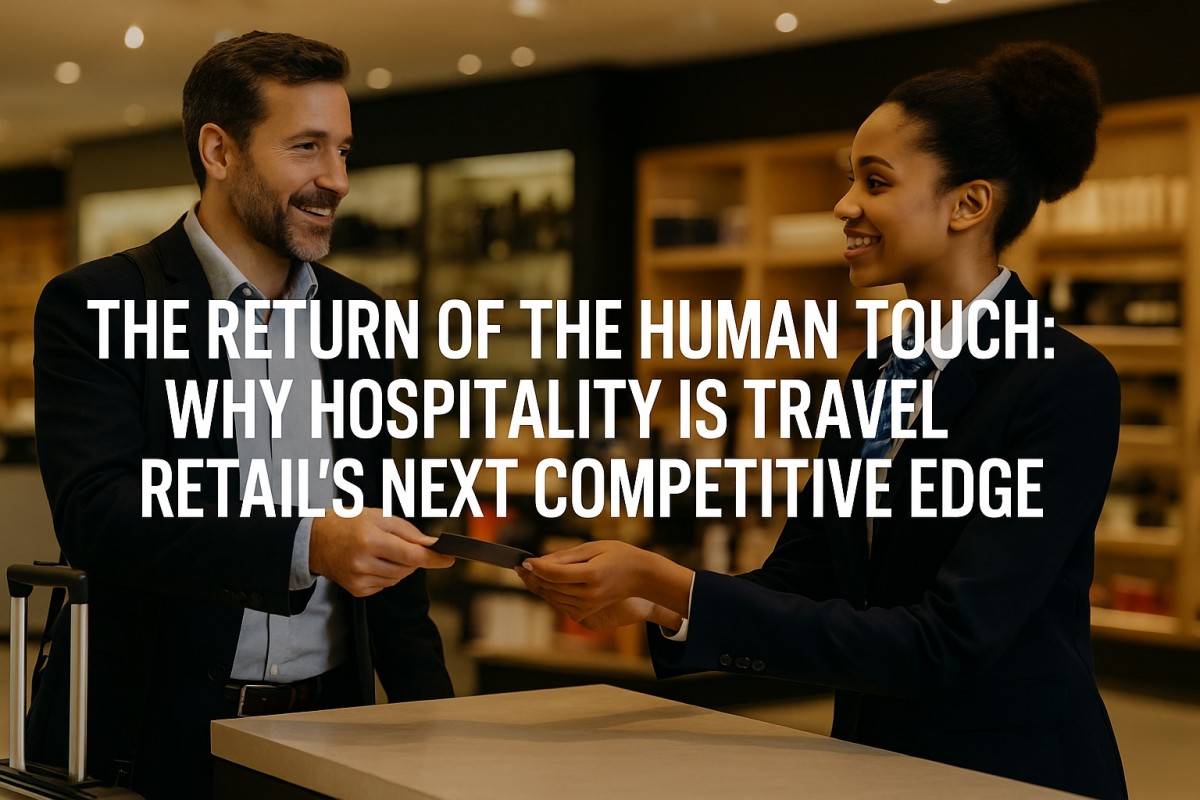
In an age obsessed with automation, one thing has become increasing clear in recent years: the thing travellers want most is people. No matter how digitally-engaged they are, once they arrive in an airport, the biggest impact on the traveller experience is not screens or apps, it is human interaction.
According to recent data, over 60% of shoppers globally still say they prefer in-person service when making a purchase. That figure rises significantly in high-value and high-emotion environments, such as airports, where travel anxiety and time sensitivity can cloud even the most confident shopper’s judgment.
What does this mean for travel retail? It means we need a reset, not just in our product mix, or our our pricing (those are conversations for another day) we need a shift in our mindset.
Over 60% of shoppers globally still say they prefer in-person service when making a purchase. That figure rises significantly in high-value and high-emotion environments,
Regular readers of this blog will be aware this is a topic I have been speaking on for a while, as it is a key belief for both me and our approach at 2.0 & Partners: In 2025, hospitality is no longer a soft skill. It’s a commercial driver.
Travel retail has long been measured by transactions: basket sizes, conversion rates, average spend per passenger. These are easy numbers to measure; but today’s traveller is not simply looking to shop. They’re looking to feel something; they want to be reassured, welcomed and understood. These are the feelings that lead to emotional connection and emotional connection leads to engagement, loyalty, and yes, spend.
Studies by the Harvard Business Review have shown that emotionally connected customers are more than twice as valuable as satisfied ones. In an airport setting, this is magnified. Travellers are often navigating fatigue, pressure and uncertainty. When a staff member offers kindness, clarity, or genuine attention, it breaks the pattern. It lifts the mood. It opens the door.
And when the human experience improves, commercial outcomes follow. That’s not sentiment. That’s strategy, and it is simple: Hospitality can no longer live solely on the shop floor.
If we want to elevate the airport experience, then every team member, from check-in to security to retail to gate, must see themselves as a host. That means a kind word at bag drop. A calm voice at security. A helping hand at the duty-free entrance. A proactive offer of assistance in the departures hall. This isn’t about turning staff into salespeople. It’s about empowering them to become ambassadors for the journey. This is the central concept of our Airport Ambassador Academy course.
When hospitality is woven into the entire traveller touchpoint map, the benefits ripple outward: better mood, more relaxed passengers, increased dwell time, and a greater openness to explore, experience, and purchase.
When hospitality is woven into the entire traveller touchpoint map, the benefits ripple outward
We often talk about “shopper mindset.” But in travel retail, that begins long before a customer crosses a store threshold. A traveller who feels well-treated is more likely to slow down, to browse, to ask questions. They’re more open to a tasting. More curious about a fragrance. More inclined to say yes to a recommendation.
We’ve seen this time and again in our work with frontline teams at 2.0 & Partners. The difference between a missed opportunity and a memorable interaction is not just about price or product, most often it’s about how people feel in the moment.
And when passengers feel calm, confident and cared for then they spend more. If we want to futureproof travel retail, we must stop seeing hospitality as “extra.” Because in an increasingly digital world, the most powerful differentiator left is the human experience. Airports can no longer afford to silo service. It must be holistic, intentional and emotionally intelligent.
The time has come to build environments where hospitality is not a department, but a culture. Where every team member is trained not just to operate, but to engage. Where service is not reactive, but anticipatory. And where travellers don’t just move through a space, but feel something memorable within it.
In 2025, the human touch isn’t optional. It’s the new luxury.