
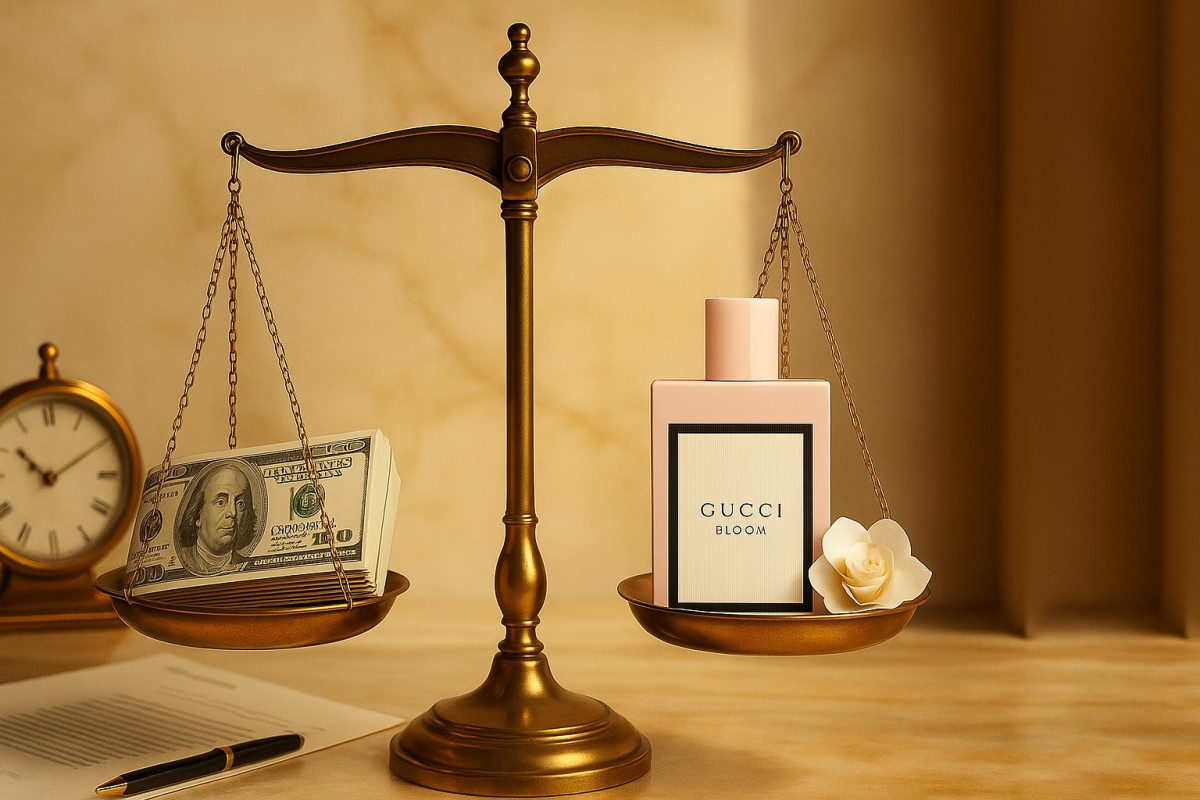
In luxury, as in any field where value lies in coherence and perception, the real challenge is not growth but deciding what to keep inside and what to let go. It is a fine line between efficiency and the loss of identity, and Kering’s recent decision to sell its beauty division to L’Oréal makes it even clearer.
From a purely financial standpoint, the move is flawless. The group reduces its debt, strengthens liquidity and entrusts a complex business to the world’s leading beauty powerhouse. It is the logic of synergy and scale. Yet, despite this economic soundness, the decision raises a deeper question: how much of its identity can a luxury brand delegate before it starts to fracture.
Today, brands are no longer mere producers of goods, but cultural projects. They live through storytelling, experiences and emotional connections. A fragrance, like eyewear or skincare, is not a functional extension but a linguistic one. In that sense, outsourcing beauty does not only mean relinquishing an operational division, it means giving up a channel of direct emotional engagement with consumers.
Despite the economic soundness, the sale raises a deeper question: how much of its identity can a luxury brand delegate before it starts to fracture.
Recent history has shown that internalising activities once considered peripheral can turn into a decisive competitive advantage. This is what happened when Kering created its own eyewear division, a move that seemed bold at the time but is now widely recognised as a success. Bringing a seemingly ancillary business inside allowed the group to control quality, distribution and narrative, strengthening the bond between product and brand identity.
The paradox is that, just as Kering appeared ready to replicate that model in beauty, it chose to take the opposite path. It is a decision that reflects the eternal tension between short and long term, between financial rationale and brand strategy. Selling to L’Oréal guarantees immediate stability and strong results, but also means surrendering a part of the independent potential that beauty could have brought to Kering’s luxury universe.
In today’s landscape, where fashion, art and lifestyle increasingly overlap, the strength of a brand lies in its ability to control the entire experience. Aesthetics, communication, packaging, scent, every element contributes to coherence and belonging. Entrusting that to an external partner, however skilled, risks turning the brand into a signature rather than a voice.
In today’s landscape, where fashion, art and lifestyle increasingly overlap, the strength of a brand lies in its ability to control the entire experience.
Perhaps it is time for luxury groups to reconsider the very meaning of licensing, not as an industrial shortcut but as a temporary tool to gain expertise before bringing control back home. It is a longer, harder path, but one that builds authenticity and safeguards creative freedom over time.
Luxury does not thrive on volume but on vision. And vision requires control, coherence and courage. Kering has shown this before. Its recent move reminds us all that, in the end, the true capital of luxury is not financial but cultural. And that cannot be outsourced.
Happy Monday.