
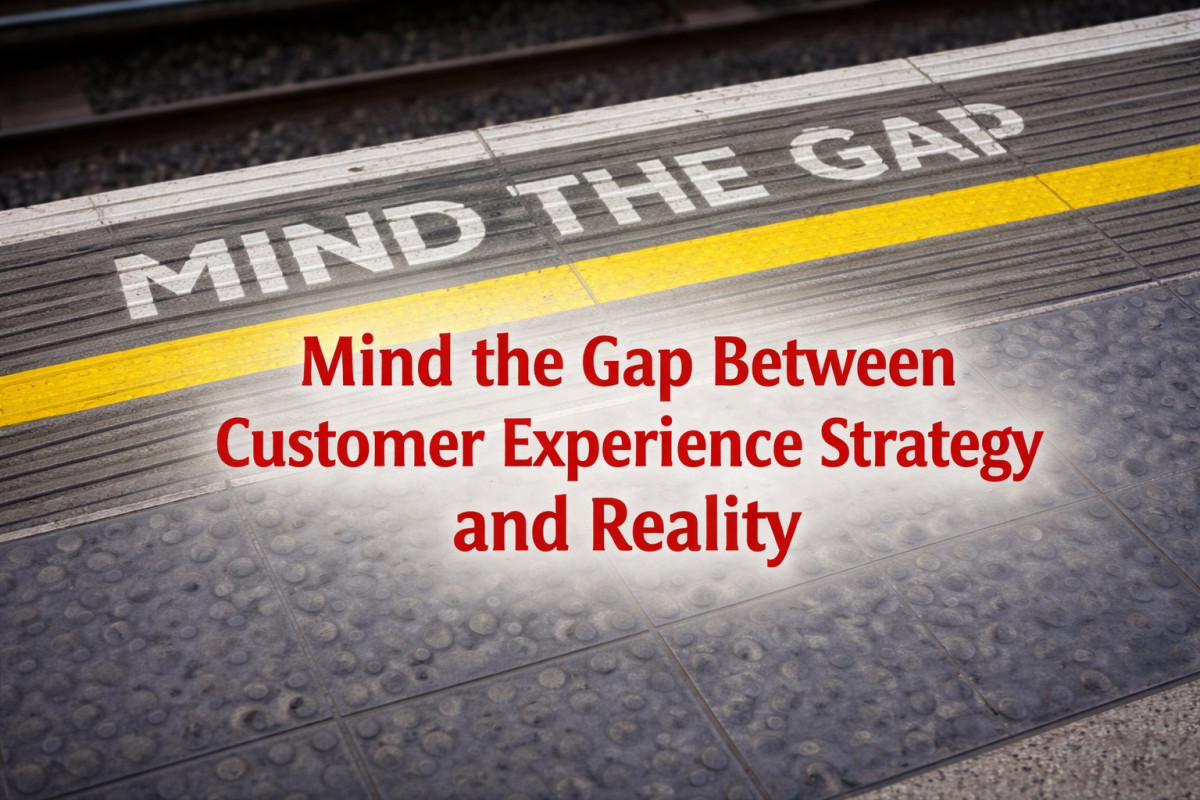
Travel retail talks confidently about customer experience. The language is well established, the ambition is clear, and the intent is rarely in question. Yet the reality experienced by travellers often tells a different story.
There is a gap between what the industry believes it delivers and what is actually encountered on the shop floor, and in many cases that gap is widening rather than closing.
Customer experience has, to some extent, become a narrative the industry tells itself. Experiences are described as tailored, service is positioned as hospitality-led, and data is assumed to be fully integrated into decision-making. On paper, the model appears sophisticated and mature. But customer experience is not defined in strategy documents or presentations. It is defined in moments — in how a traveller is greeted, how confidently they are engaged, and how relevant the interaction feels in the context of their journey. It is in these moments that the gap between ambition and execution becomes visible.
Customer experience has, to some extent, become a narrative the industry tells itself…But customer experience is not defined in strategy documents or presentations.
This is not a new pattern. Travel retail has seen similar cycles before, where concepts such as omnichannel and disruption were positioned as transformative forces. Over time, both became part of the industry’s everyday language and operating model, but neither consistently delivered meaningful differentiation. They were adopted, but not always fully realised. Customer experience now risks following the same trajectory, becoming something that is widely discussed but unevenly executed.
The reality is that travellers do not engage with strategy. They engage with execution. They encounter teams who may or may not be equipped to deliver meaningful service, environments that are often increasingly standardised, and propositions that can feel interchangeable from one airport to another. Decisions are made quickly, often under time pressure, and expectations are shaped by experiences far beyond travel retail. In this context, the gap between what is promised and what is delivered is not theoretical. It is immediate and highly visible.
Saying that the goal is to deliver five-star service is straightforward. Building the conditions required to achieve it is significantly more complex. It requires relevant and continuous training, a genuine integration of cultural understanding into service delivery, and the discipline to ensure that the right people are in the right roles at the right time. It also requires the ability to measure performance meaningfully and to act on those insights consistently. Without these elements in place, hospitality remains an aspiration rather than a reality.
Delivering strong customer experience is not simply a creative or conceptual exercise. It is a matter of commercial discipline. It requires sustained investment, clarity of execution, and alignment between insight and action. Data must inform behaviour, not just reporting. Training must translate into observable change on the shop floor. And performance must be tracked with the same rigour as any other commercial metric. Without this structure, experience risks becoming superficial — something that is presented rather than delivered.
Delivering strong customer experience is not simply a creative or conceptual exercise. It is a matter of commercial discipline.
This is the thinking behind the Travel Retail Customer Experience Investment & Maturity Pulse survey developed by 2.0 & Partners. The intention is to move beyond perception and understand where the industry truly stands. Not in theory, but in practice. Where is customer experience genuinely embedded within operations, and where does it remain conceptual? Where is investment translating into measurable performance, and where is it falling short? These are not abstract questions. They are central to the future competitiveness of the sector.
Travel retail does not lack ambition. What it must now demonstrate is consistency in execution. If customer experience is to become a genuine differentiator, the industry must move beyond language and into measurement, beyond aspiration and into action.
Because ultimately, there is only one version of customer experience that matters: the one the traveller actually experiences.
Have your say in the Travel Retail Customer Experience Investment & Maturity Pulse survey: Click here.