
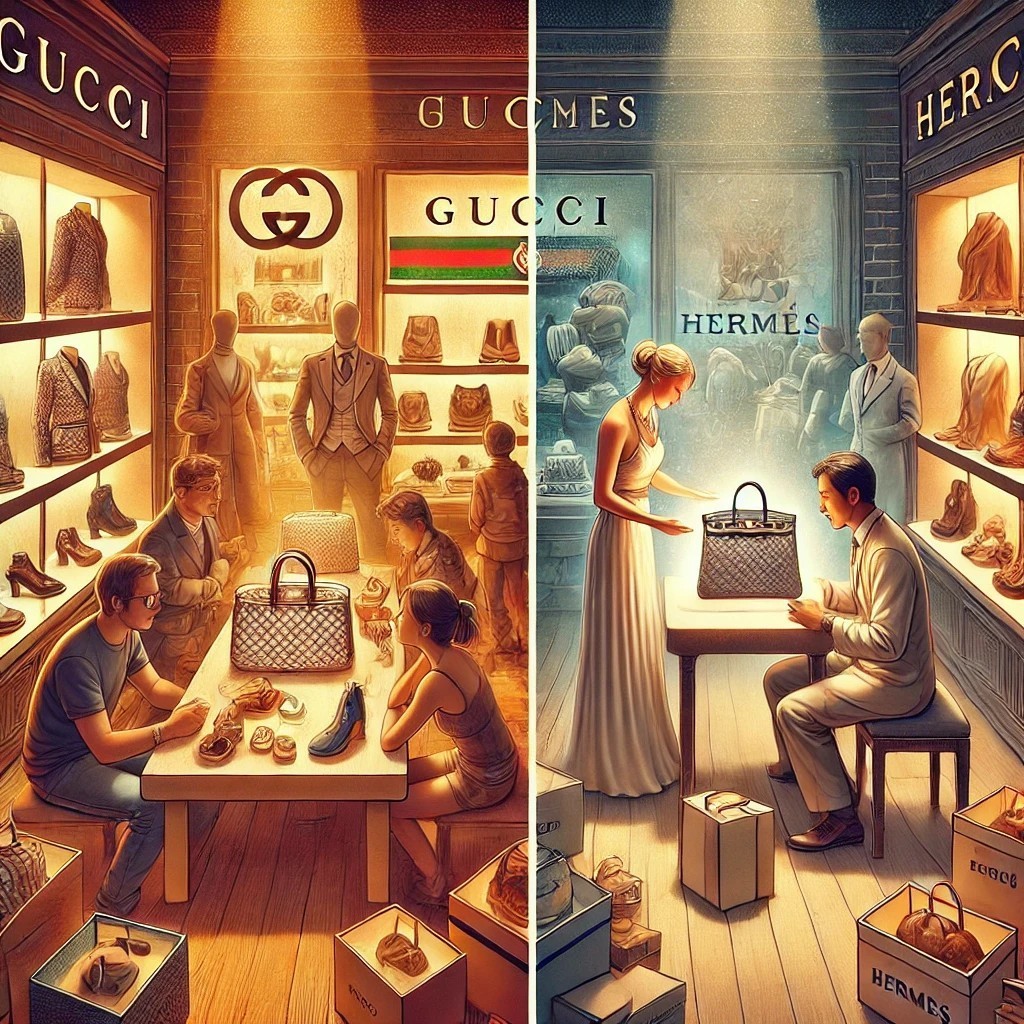
The latest round of financial results from across the luxury sector have provided interesting reading – not just on the ongoing performance of leading brands, but also on what shoppers in the market truly want today. As many of us have warned for a long time, consumers are now voting with their patronage and their wallets.
There are some positive results and some challenges, such as the 2% year-on-year drop in revenue for LVMH across the first nine months of the year. But one of the most stark contrasts is in comparing two of the most prominent luxury brands, Hermès and Kering’s Gucci, which showcase the mixed fortunes in the high-end market.
Gucci continues to struggle, with falling sales and strategic uncertainty. Kering’s Q3 2024 earnings were disappointing; the company’s revenue dropped by 16%, and Gucci’s own sales plummeted by a staggering 25%. In contrast, Hermès reported an impressive 11.3% increase in sales for the same period.
I have spoken before about the challenges of comparing luxury results, but these mixed fortunes shine a light on one of the key issues which many in the luxury sector must come to terms with. Simply put, Hermès continues to flourish because the brand demonstrates an understanding of the true essence of luxury. This is not just about selling products, but about crafting emotional journeys that mesmerise customers and create lasting positive memories.
This is not just about selling products, but about crafting emotional journeys that mesmerise customers and create lasting positive memories
Gucci has faced many challenges. The brand is not alone in paying for its overreliance on the Chinese market, which has softened significantly, and ongoing global luxury headwinds. Efforts to revitalise the brand with product overhauls and leadership changes have so far not steadied the path. By comparison, Hermès has stayed true to its core; Its timeless appeal, along with a focus on high-end, iconic leather goods such as the Birkin bag, has kept it ahead of the competition.
But the real difference is in the experience.
Luxury isn’t simply about owning a product; it’s about the emotional reaction that brand evokes and the journey it takes shoppers on at every touchpoint. Hermès has mastered this by focusing on its core values of craftsmanship, scarcity, and exclusivity. Shoppers gain a sense of connection and emotional resonance from their interactions with the brand. From the moment one enters a Hermès boutique, the experience is curated to be personal and immersive, creating lasting positive memories. If a customer leaves with one of the coveted products then that is a bonus, but either way, the experience has been crafted and the memories and links created.
In comparison, Gucci’s struggles can be traced to a more transactional approach. The brand’s aggressive growth strategies, particularly in China, have focused on rapid sales and expansion. While this delivers short-term results, it will never foster the kind of long-term engagement which creates brand loyalty and return custom. The recent infrastructure shifts suggest a move in the right direction, but they have not yet created the emotional links which are needed to turn around the brand’s fortunes.
A focus on rapid sales and expansion delivers short-term results, but it will never foster the kind of long-term engagement which creates brand loyalty and return custom
The truth is that, in the modern market, the essence of luxury lies in much more than the physical product. It is about creating transformative, emotional experiences that enthrall customers and leave them with something more than a product. The modern luxury shopper wants a bespoke and ongoing narrative that they can become part of and which speak to their personal ideals and brand. Hermès has delivered on this, while Gucci’s focus on expansion and sales growth has left customers feeling less connection.
The luxury sector is as much about emotion as it is about exclusivity. In that regard, Hermès continues to lead by example. Its ability to take customers on an emotional journey has proven to be a key factor in its enduring success, while Gucci’s more product-driven approach has left it vulnerable in a challenging market.
As the luxury sector faces increasing pressure, the importance of customer experience and emotional engagement has never been clearer. The brands that understand this will remain at the top of the luxury pyramid.