
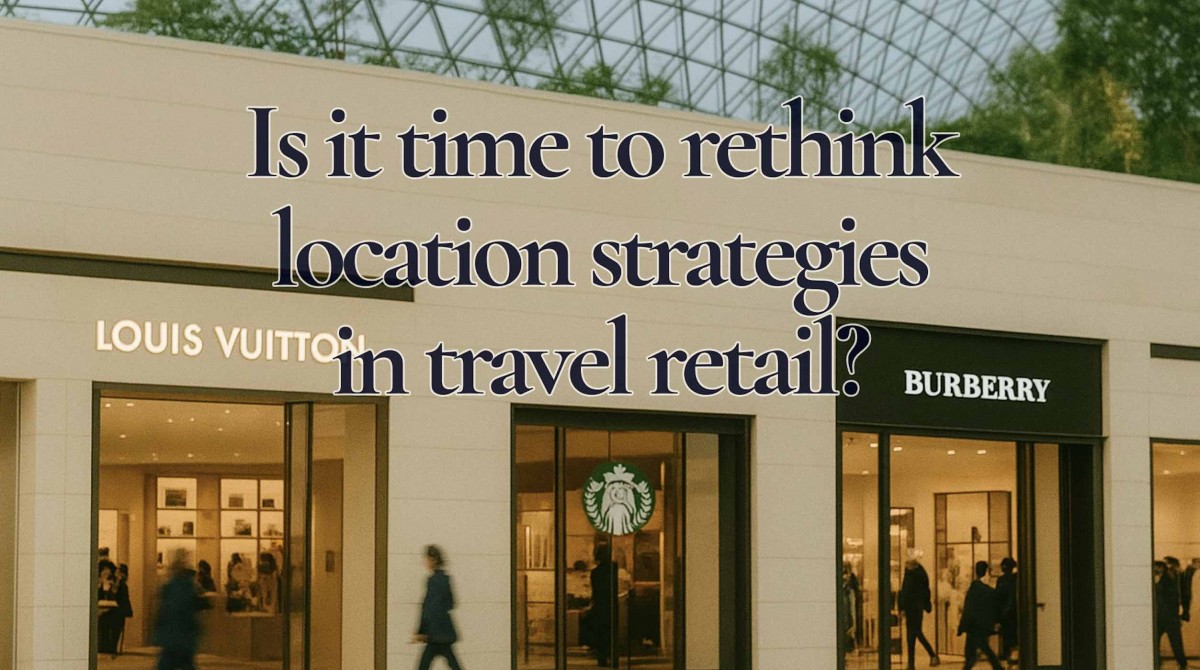
For decades, both in cities and in airports, luxury brands have followed the same invisible rule: the best position is one next to their peers. The geography of prestige has always been about clustering. In Milan, Via Montenapoleone gathers the icons of fashion under a single street name, just as Bond Street does in London or Rue Saint Honoré in Paris. The same logic has shaped airports: create a “luxury avenue” where all the big names coexist side by side, forming a concentrated showcase of status and aspiration.
This formula worked perfectly when the definition of luxury was clear and linear. The luxury consumer travelled in business class, dressed in a certain way, and looked for symbols that confirmed their identity. But today that consumer has evolved. They have become unpredictable, fluid, and much harder to label. They can wear Uniqlo in the morning and Armani in the evening, fly low cost yet buy an Hermès scarf, drink speciality coffee, and order street food while scrolling through a Cartier catalogue on their phone.
This hybridisation of lifestyle calls into question a long-held assumption: does it still make sense to cluster stores only by price positioning? Or should brands start positioning themselves close to those that speak to the same audience, even if they play in different price leagues or categories?
Today, the luxury consumer has evolved. They have become unpredictable, fluid, and much harder to label; They can wear Uniqlo in the morning and Armani in the evening…and order street food while scrolling through a Cartier catalogue on their phone.
Hermès in Williamsburg is a striking example. The French maison decided not to open in the classic high-end area of Manhattan, but in the most vibrant and creative part of Brooklyn. There, on North Sixth Street, Hermès stands among Nike, On, and Patagonia, surrounded by restaurants, eyewear boutiques, and design cafés. Far from diluting its prestige, this move enhances its appeal, aligning the brand with a dynamic, authentic environment that reflects the lives of the modern, quality-driven consumer. The message is simple: relevance today comes not only from price, but from proximity to culture.
Travel retail offers fertile ground for the same reflection. The traditional airport layout, divided into rigid “luxury zones,” “fashion streets,” and “premium corridors,” was designed for a customer who made clear distinctions between categories. But that is not how travellers behave anymore. Their journeys are no longer segmented. A young Chinese professional might buy an iPhone at Apple, enjoy a ramen bowl, and then stop at Dior Beauty. A Middle Eastern traveller might browse a tech store, pick a pair of On trainers, and later buy a Louis Vuitton bag. What connects these purchases is not price, but mindset and moment.
Some airports have already begun to evolve. At Doha Hamad International, luxury houses like Louis Vuitton and Dior share the same experiential garden area with premium cafés and lifestyle spaces. The design itself encourages emotional exploration rather than a linear luxury path. Sydney Airport is moving in the same direction with its new international terminal, where the proximity between fashion, tech, and F&B concepts creates a smoother flow of experiences instead of isolated categories. And at Singapore’s Jewel Changi, the model reaches its peak: Apple, Tiffany, and Shake Shack coexist under one dome, proving that cross-category synergy can redefine how travellers engage with brands.
Does it still make sense to cluster stores only by price positioning? Or should brands start positioning themselves close to those that speak to the same audience, even if they play in different price leagues or categories?
This transformation is not simply architectural. It reflects a deeper shift in how travellers perceive value. For them, luxury no longer means isolation; it means inclusion within a wider world of meaningful experiences. The old logic of exclusivity is giving way to one of relevance.
For airports and operators, this means rethinking not only where brands are placed, but how the entire retail environment interacts with the passenger’s emotional rhythm. It calls for a new geography of travel retail, where clusters are built around shared attitudes rather than price levels, and where a sense of place replaces the sense of hierarchy.
The luxury consumer has changed. The journey has changed. And so must the map.