
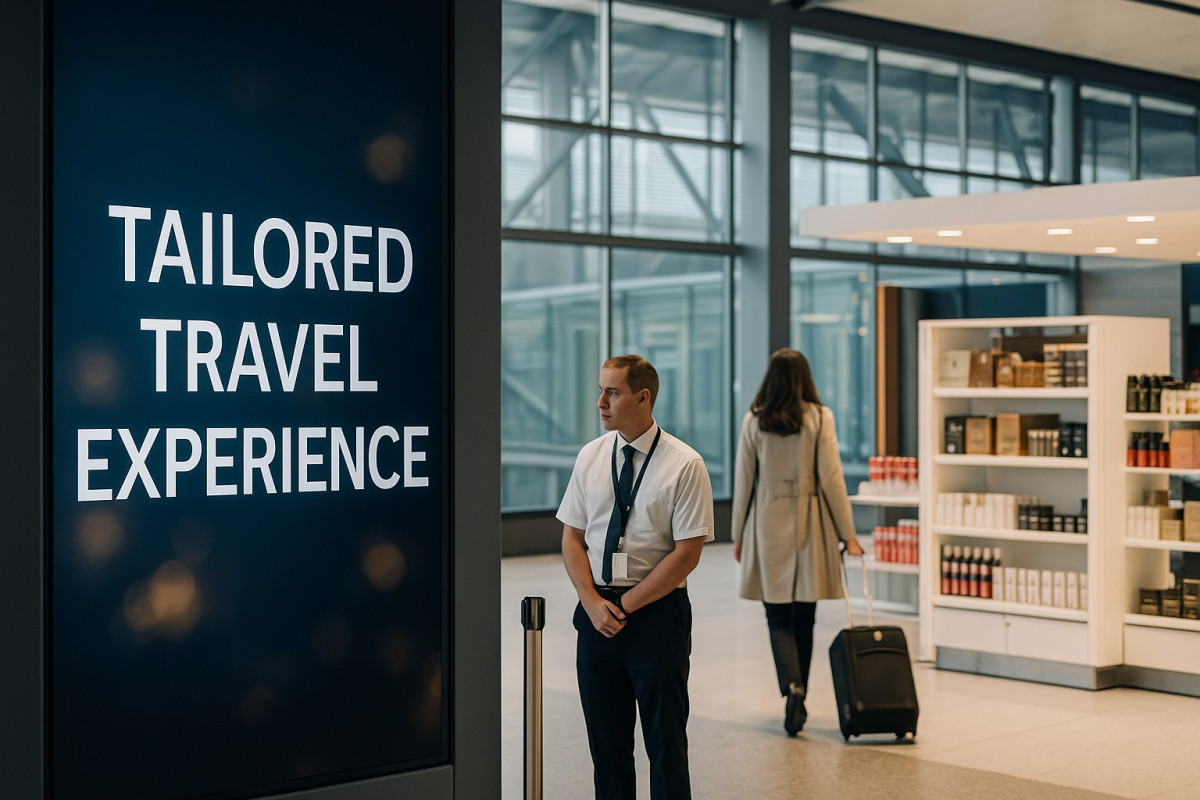
2025 was probably the year in which travel retail used the word experience more than any other. It became an automatic reflex in conferences, development plans, commercial pitches and communication. Everyone talks about experience and everyone promises experience, as if the sector had finally discovered the formula that will transform everything. But walking through airports, stepping into stores or observing daily dynamics is enough to realise that the real experience has changed very little. The gap between what the sector says and what the customer actually lives remains almost unchanged.
It is an interesting paradox. The more the narrative of experience grows, the less experience seems to evolve. And this happens because travel retail continues to work mainly on the surface of experience and far less on its substance. It is evident in the endless repetition of terms such as hospitality, personalisation, digitalisation and omnichannel. These words certainly have meaning, but they have not yet transformed real behaviour in stores.
Walking through airports, stepping into stores or observing daily dynamics is enough to realise that the real experience has changed very little. The gap between what the sector says and what the customer actually lives remains almost unchanged.
Welcoming a customer does not mean greeting them. It means reading them, understanding who they are, where they come from, the rhythm they bring, and what intention they communicate in the first ten seconds. Most teams are not prepared to do this, and that creates the main distance between what we promise and what we offer. The promise of hospitality does not match the reality of a customer entering a store without truly being seen. The promise of personalisation does not match a conversation that starts from the same script every time. The promise of engagement disappears in the details that go unnoticed, in the missed glances, in the opportunities left untouched.
To this we must add another defining element of 2025: the explosion of technology as the universal solution. AI became the easiest word to insert into a presentation to demonstrate innovation. But the experience in store does not improve just because AI appears in a slide. It improves when technology truly enters processes. And this, today, rarely happens. Digital tools are often introduced because they “look modern”, not because they are integrated into the way people work. Instead of simplifying or strengthening the customer interaction, technology frequently remains an accessory, a decorative presence that does not influence behaviour or quality.
The experience in store does not improve just because AI appears in a slide. It improves when technology truly enters processes
The most striking dynamic is that the sector continues to invest heavily in the visible part of experience: lighting, floors, materials, displays, architectural design. Everything is polished, everything is impeccable. But a beautiful store is worth nothing if the interaction does not match it. True luxury does not live in the scenography, but in what happens within it. And it is surprising to see how often this essential point is underestimated. Travel retail has created magnificent environments, often populated by mediocre interactions. It is a constant short circuit: high aesthetics, low experience.
This becomes even clearer through the work we at 2.0 & Partners carry out with Strategic Mystery Shopping. Different stores, different categories, different airports, yet similar patterns emerge with astonishing regularity. Engagement is uncertain or late. Customer reading is weak. Cultural understanding is limited. Behaviours do not change with the store, the brand or the format. This shows quite clearly that experience does not improve with a new layout, a new logo or a more creative campaign. It improves when people change. And they change when they have clear models, coherent training, concrete tools, practice and accountability.
In other words, experience is not the result of a claim but of a behaviour. It is not built on what we say but on what we do. And in 2025, the sector did little to transform behaviours. It spoke a lot, but it executed very little. It announced, but it did not implement. It described ambition without building the structure that ambition requires.
Experience is not the result of a claim but of a behaviour. It is not built on what we say but on what we do.
Experience does not evolve until the processes that generate it evolve. It does not evolve until we accept that experience is an operational discipline, not a creative concept. It does not evolve until training becomes a continuous system rather than a one‑off workshop. It does not evolve until teams understand what it really means to engage, accompany, listen and interpret. It does not evolve until companies measure what truly matters rather than focusing only on what they sell and not on how they sell it.
The risk is that the sector becomes too comfortable with its own narrative, mistaking it for reality. But customers do not live the narrative. They live the actions. And when the actions do not change, experience remains still. Worse, it deteriorates, because expectations grow and delivery does not.
2026 must be different. Not another year of storytelling but a year of responsibility. Not another year of rendering but a year of execution. Not another year of slogans but a year in which we finally decide to invest in people, processes, skills and behaviours. Everything else is decoration.
Travel retail does not need more words about experience. It needs more experience itself. The one the customer feels, not the one we describe in presentations. And the moment to build it is not tomorrow. It is now.