
Chinese New Year is always a big moment in travel retail. The calendar turns, and the market responds as it always does: limited editions, special packaging, heritage storytelling, and high-profile launches designed to capture attention and drive sales.
This year is no different. From Rémy Martin’s Louis XIII Lunar New Year decanter to Davidoff Cigars’ annual release, the market has once again delivered products that are beautiful, prestigious and technically impressive. They generate excitement. They create noise. They give the industry something to talk about.
But increasingly, they are not enough.
According to Bain & Company’s latest 2025 Chinese Personal Luxury Goods Market report, demand for luxury is beginning to recover — but the behaviour of Chinese shoppers is changing. Passion for shopping abroad is waning. In 2025, just 35% of luxury purchases by Chinese consumers were made overseas. That figure is down on 2024, and dramatically lower than pre-pandemic levels in 2019.
At the same time, domestic shopping is strengthening. So are domestic brands. When Chinese consumers do travel, the motivation is shifting. The purchase is no longer the point. The experience is.
When Chinese consumers do travel, the motivation is shifting. The purchase is no longer the point. The experience is.
This is where travel retail needs to be honest with itself. For too long, Chinese New Year activations have been treated as product moments rather than cultural ones. Launching a limited edition has been positioned as a celebration in its own right. But releasing a product is not, in itself, added value for the traveller.
Gifting will always play a role, particularly around a holiday rooted in symbolism and generosity. It can still drive sales. But it does not build long-term brand engagement on its own. Brands focused solely on shifting volume during peak moments are missing a much bigger opportunity.
If Chinese New Year is a celebration, then travel retail should treat it like one.
That means creating moments, not just merchandising. It means designing spaces that feel celebratory, social and emotionally resonant — places where travellers can pause, connect and share an experience with others. It means bringing the spirit, meaning and cultural significance of the holiday to life, rather than simply using it as a visual theme for packaging.
In that context, limited editions should not be the headline. They should be the takeaway. The memento of a moment well spent, not the reason for the interaction in the first place.
This means bringing the spirit, meaning and cultural significance of the holiday to life, rather than simply using it as a visual theme for packaging.
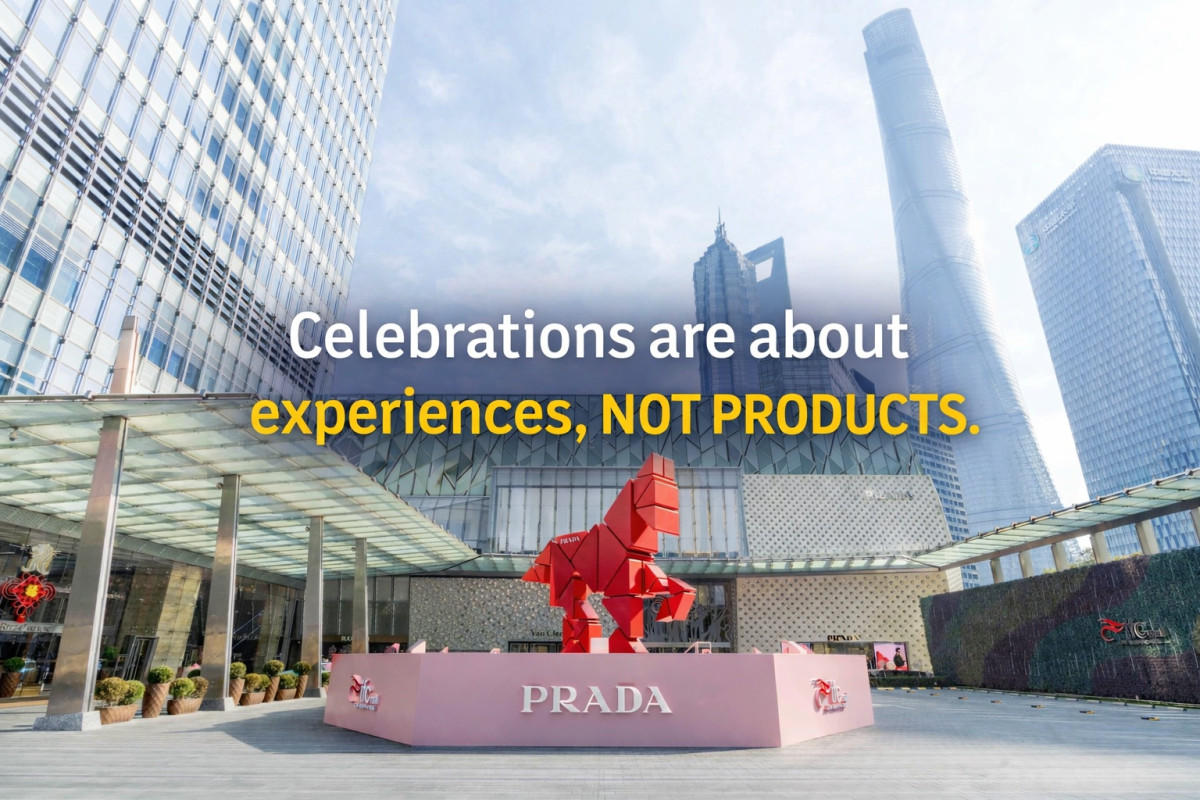
A powerful example of getting experience-led engagement right this Chinese New Year comes from Prada with its Year of the Fire Horse campaign. Rather than relying solely on limited-edition products, Prada translated one of the rare zodiac signs into a multi-sensory cultural moment, fusing the traditional symbolism of the Fire Horse with its modern triangular logo to create large-scale art installations in Shanghai and Chengdu that serve as gathering points for community and celebration. By centring cultural symbolism, storytelling and physical experiences that travellers and local guests can participate in, rather than just observe, Prada demonstrates how luxury activations can generate emotional momentum and cultural connection, rather than simply pushing products tied to a zodiac motif.
Chinese shoppers are telling us, clearly, what they value when they travel. They are not looking for more product. They are looking for meaning, memory and experience.
If travel retail wants to remain relevant in this market, Chinese New Year must evolve from a retail moment into a genuine celebration.