
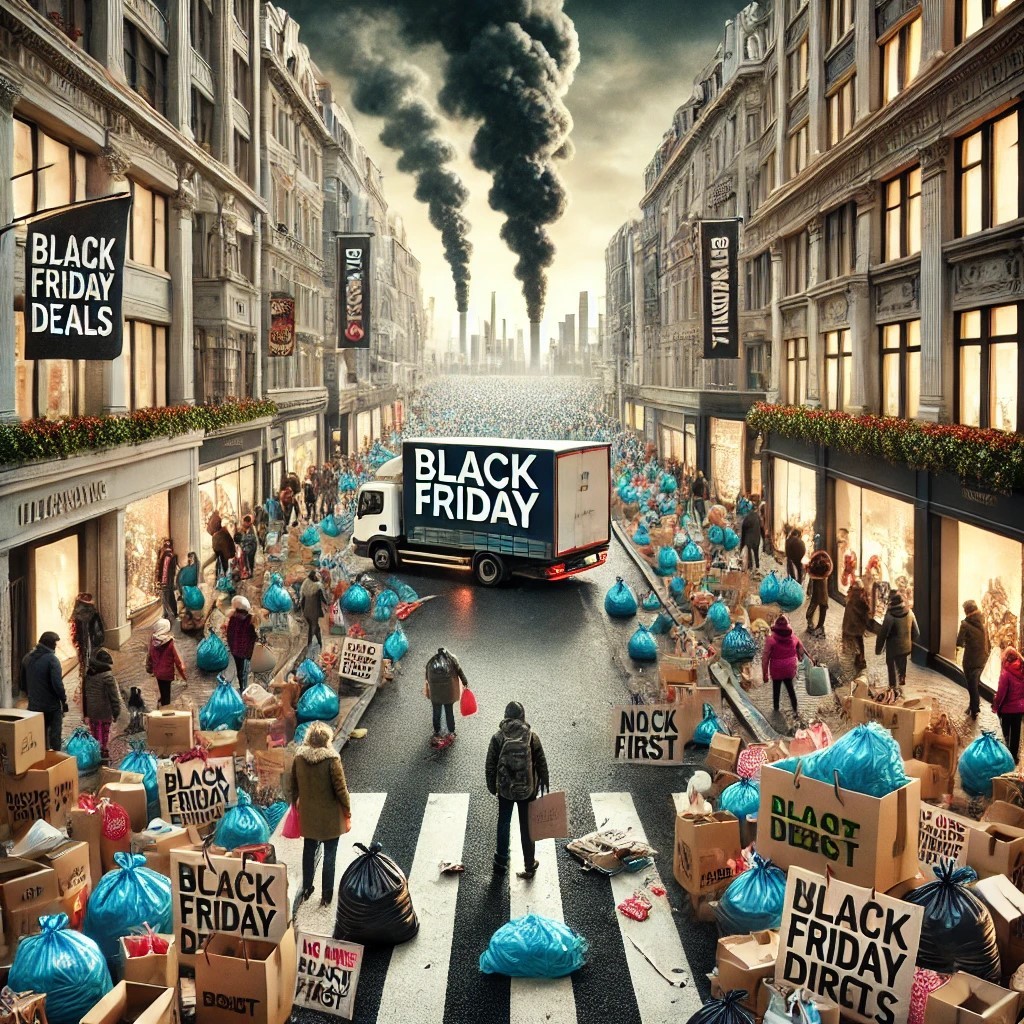
Black Friday has become a big part of the retail year, with brands around the world offering apparent discounts to drive sales ahead of Christmas. There is no doubt it is a key event – in 2022, American shoppers alone spent $9.8 billion during the sale, and last year they spent $9.2 billion online alone.
But in an industry where so many of us spend so much time talking about sustainability and ESG, can anyone truly say that Black Friday fits in with what we promise?
There can be no doubt that is does not. From wasted packaging, to emissions on transportation and the natural waste that comes with spontaneous, discounted purchases, Black Friday is a black mark on the retail sector’s green credentials. Research has shown that Black Friday deliveries generate about 429,000 tonnes of greenhouse gases every year. In Europe, trucks delivering the increase in shopping created 1.2 million tonnes of CO2, according to clean transport and energy advocates T&E. This is 94% higher than the average week. According to Money.co.uk, the amount of greenhouse gas emissions created by Black Friday sales is equal to 435 return flights from London to New York.
However you look at it, these are incredible figures. Forbes reports that in 2019, Britain as a whole created 351.5 million tonnes of greenhouse gas emissions – Black Friday is more damaging to the environment than all of Britain in a whole year.
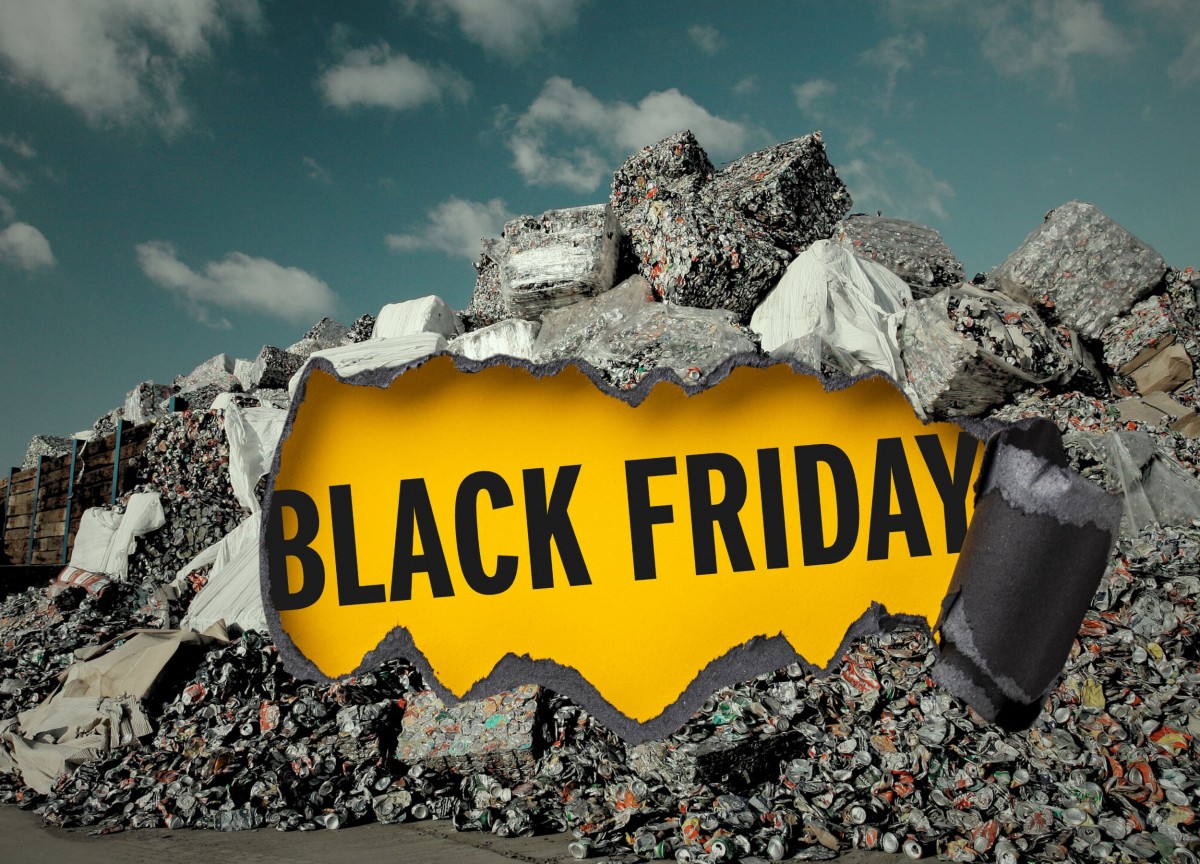
This is not to mention packaging and waste. Cut prices and loud promotions lead to people buying without thinking. That is the idea and appeal of Black Friday for many companies. But, the Green Alliance reveals that 80% of Black Friday items are discarded. Household waste production in the US between Black Friday and New Year is 25% higher than the rest of the year, according to Boston Consulting Group.
There can be no doubt that these are shocking figures and ones which the retail sector must take seriously if it wants its sustainability pledges to be anything more than greenwashing. As always, there are those who are trying to change the course. Patagonia – as is often the case – is urging shoppers not to buy, while brands such as LUSH and The Ordinary close their stores and refuse to take part in the flash sales.
But what is truly needed here is a change of mentality from the whole sector. If the retail industry wants to be taken seriously as a player in the field of sustainability then we must all be willing to put the future of the planet ahead of making a quick buck. Otherwise we are lying to ourselves and lying to our customers.